
Homegrown quantum company Diraq deploys in Equinix DC
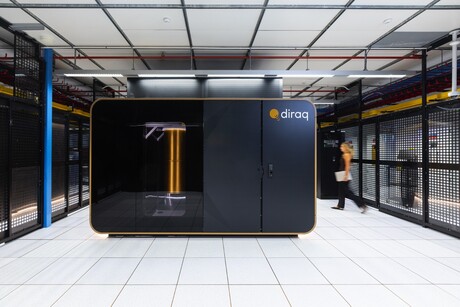
In what is said to be an Australian first, Australian quantum computing company Diraq has installed a quantum computer inside an Equinix IBX data centre in Sydney.
The computer has been designed to scale without requiring the data centre to scale with it. The system currently operates with eight qubits and draws less than 20 kW of power, but Diraq is targeting deploying up to 256 qubits within the same system within the next year. A future utility-scale system is expected to draw around 300 kW of power, which is less than a third of the power required for a single next-generation AI rack.
Likewise, the current system takes up 16 m2 of floor space, and future utility-scale deployments could be as small as 5 m2. Diraq expects this strategy to enable it to avoid the costly and expensive infrastructure expansion other quantum technologies are expected to face in the future.
Equinix Australia MD Jarrod Nink said the deployment represents an important milestone for Australia’s quantum industry.
“By hosting Australia’s first quantum computer in a commercial data centre, we are helping bridge the gap between research and deployment, while creating the foundation for quantum systems to connect seamlessly with the cloud, AI and high-performance computing ecosystems that enterprises rely on today,” he said.
Diraq has meanwhile published a report, ‘Quantum at Work’, outlining how quantum computing could benefit fields including medicine, energy, materials, climate and transport.
Analysis developed for the report indicates that developing a new medicine costs more than $2 billion and takes up to 15 years, with fewer than one in 10 candidates ever reaching a patient. Improving clinical trial success rates by just 10 percentage points could mean around 50% more medicines reaching the market annually, and save drug developers $600 million per medicine, provided the quantum computer can run for under $65 million per year, the report found.
Diraq is targeting costs of at most tens of millions for its utility-scale system, compared to hundreds of millions or even billions per system for the majority of quantum architectures, Diraq CEO and Founder Andrew Dzurak said.
“Advanced quantum technologies have already helped compound an estimated $19–27 trillion in value globally, and BCG estimates quantum computing could unlock a further $3.5 trillion at maturity,” he said. “It’s clear that the companies that build real capability now will end up capturing that future value. This deployment is how Australia starts doing exactly that: proving research born here can be engineered and built to a global standard, with value that reaches people here and around the world.”
He said the world is reaching the point where quantum computing can start to reach industries and the people they serve.
“That shift matters more than any single milestone, because it changes what’s possible for every field quantum touches, from medicine to materials to logistics,” he said. “Our silicon spin approach is what puts that within reach in five years, not decades. It gives us a manufacturing path already proven at industrial scale, a cost curve that improves as we add qubits, and a system designed to run inside today’s existing computing infrastructure.”
Diraq received a $20 million strategic investment earlier this year from the National Reconstruction Fund Corporation, which the company is using for research and product development and commercialisation. The company’s technology is built on complementary metal oxide semiconductor (CMOS)-based architecture, allowing it to leverage existing semiconductor manufacturing to develop quantum computers at a relatively low cost.
The company also recently advanced to Stage 3 of US-based DARPA’s Quantum Benchmarking Initiative, which could lead to potential funding of up to US$300 million ($433.66 million), and signed a US$38 million letter of intent with the US Department of Commerce under the CHIPS and Science Act.
Equinix launches EPIC facility in Sydney
Equinix has launched an Enhanced Performance Innovation Centre at its SY5 in Sydney, to help...
Vaisala launches scalable environmental monitoring for data centres
As data centres scale to support growing AI workloads, environmental monitoring infrastructure...
Government seeks consultation on the future of AI in Australia
The Australian Government has announced it is seeking feedback on the future of artificial...


