Canon introduces EDR to office printer ranges
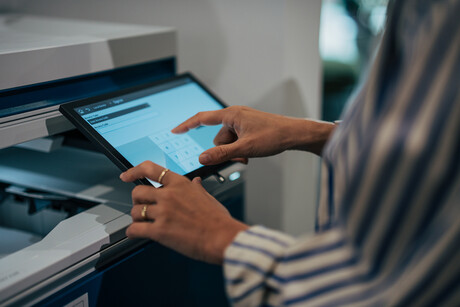
Canon is introducing endpoint detection and response (EDR) technology to its office printer portfolio in the Oceania region, including Australia. The move is aimed at strengthening security for office printers and multifunction devices, and represents the first time EDR has been commercialised in printing devices, according to the company.
Starting next month, Canon’s EDR technology will be enabled as a firmware update to selected models in Canon’s imageFORCE, i-SENSYS, imageCLASS X and imageRUNNER ADVANCE DX printer ranges. The technology will also be available for new devices in the classes.
Canon is introducing the technology in response to increasing use of printers connected to cloud services and corporate networks, as well as the growing sophistication of cyber attacks, according to Canon Oceania GM for Product Marketing Tsutomu Ishihara.
“As printers become increasingly connected to cloud services and corporate networks, they can process sensitive information and, when unsecured, can provide a pathway into wider business systems,” he said. “With cyber incidents growing in frequency and sophistication, it’s critical that organisations have a robust approach to security to protect their endpoints. Our new Printer EDR technology reflects our deep understanding of print security and has been developed to help our customers proactively monitor, rapidly detect, respond to and mitigate potential threats.”
Canon’s Printer EDR technology continuously monitors printer behaviour to detect and respond to a wide range of vulnerabilities. The solution enables the detection of both insider threats and external cyber attacks, and uses the MITRE ATT&CK framework to organise common techniques and behavioural patterns using proprietary behavioural detection technology.
When a threat is detected, the technology enables Canon’s multifunction printers to automatically take appropriate action such as blocking suspicious communications or restoring tampered settings. Detection details can be reviewed either on the device’s control panel, or through notifications sent by email or to a log management system.
Cloudera launches digital sovereignty solution
Cloudera has collaborated with Mistral to launch a solution designed to enable customers to...
Akamai adds managed services to AI stack
Akamai's in-beta Akamai Inference and Akamai Agent Sandbox solutions add managed services...
SUSE teams with NVIDIA to enable sovereign AI
SUSE has collaborated with NVIDIA to give enterprises the ability to adopt private enterprise AI...