Boards falling behind on digital transformation
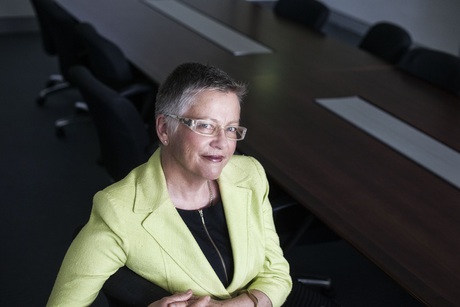
Company boards nearly universally agree that technology is vital to their business, but less than 20% have technology-capable board members, new research shows.
QUT Information Systems School doctoral student Elizabeth Valentine said that 90% of boards agree that technology is essential.
But technology governance skills are the most likely skill set to be missing or underrepresented in a company board, she said.
“Boards can no longer afford to ignore or delegate management of technology in their business, and, if they do, they run the risk of competitive, financial and reputational failure.”
Valentine, who is also managing director of consulting firm Enterprise Governance, said technology has become so important to most companies’ businesses that IT governance should no longer be the exclusive domain of the IT department.
Working with QUT Professor John Stewart, Valentine has published the first known board-level technology governance competency set.
“Technology is now integral to most business practices and processes so overseeing technology and risk has become part of a board’s ethical duty, whether they realise it or not,” she said.
“Boards set the tone for the organisation’s digital future and culture and they need EBTG [enterprise business technology governance] competency to spur innovation and more strategic use of IT.”
A failure to keep up with technology is the main cause for the decline of once-iconic brands like Kodak, Barnes and Noble, and HMV, Valentine said. “[These companies] didn’t make sudden or massive blunders, but they had barriers to digital transformation.”
CIOs and CEOs thus have an opportunity to seize the digital advantage by broadening their skill sets, she added.
Quantum computing revenue projected to reach US$1.1bn in 2027: Gartner
Gartner says that global quantum computing revenue will reach over US$1bn in 2027, and that CIOs...
Most CIOs now more responsible for workforce redesign than for core IT: survey
A survey of 3200 CIOs finds no dominant model for enterprise AI leadership, with Australian CIOs...
Security spend won't buy more certainty
Growing security budgets don't necessarily buy more certainty, and strength and spend...