Making sure the cloud is clean and green
As cloud computing becomes the rule and not the exception, University of Sydney cloud computing experts say tighter international regulations on managing computer hardware waste are needed.
With hundreds of data centres, thousands of server rooms and individual racks in Australia alone, there is an urgent need for industry to fully address the environmental impact of cloud computing, says the University’s Chair of High Performance Computing and Networking Professor Albert Zomaya.
Professor Zomaya’s urging comes on the heels of world-leading IT advisory bodies Gartner and Forrestor nominating Hybrid and Cloud Computing as among the world’s top 10 strategic technology trends.
“The industry is like a rapidly growing teen,” he says. “We are now in a perfect position to develop and implement international guidelines on how to find solutions to reduce and recycle massive amounts of computer waste.”
The world’s largest data campus is in Nevada, measuring 204,000 square metres, but China is building a larger, commercial computing centre based in Langfang. When completed in 2016, it will be nearly the same size as the Pentagon.
“Much of what is currently being used in data centres - server hardware, for example - will simply be stripped of its precious metals and then used as landfill in developing nations,” says Professor Zomaya.
Need for win-win regulation
Professor Zomaya says there is a recognised need for regulation in this area. He urges those in the IT industry to comment on an Australian Department of Industry report recommending servers, storage and other data centre equipment sold in Australia and New Zealand be subject to an energy rating scheme similar to fridges and other household goods. Submissions close in July.
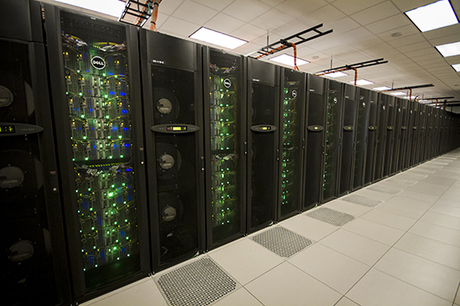
“In this highly connected world we need to be more conscious of the physical impact of cloud computing. Cloud computing centres or data centres can be as large as a football field, requiring enormous amounts of power to both run and cool their hardware. They operate 24 hours a day 7 days a week.
“Many cloud computing centres are underutilised, often not working to full capacity.”
Professor Zomaya says one way to reduce waste is to encourage small businesses to adopt a hybrid model of cloud computing: a combined use of both public and privately owned infrastructure.
“Combined usage of public and private infrastructure creates a win-win for both providers and clients. Providers increase their revenue and the facility is used closer to capacity; while the clients are saving on the provision of their own hardware, personnel and power costs,” he said.
Democratising governance: supporting every employee with responsible, secure AI
When employees have tools that help them recognise and communicate risk, governance becomes less...
Quantum computing revenue projected to reach US$1.1bn in 2027: Gartner
Gartner says that global quantum computing revenue will reach over US$1bn in 2027, and that CIOs...
Most CIOs now more responsible for workforce redesign than for core IT: survey
A survey of 3200 CIOs finds no dominant model for enterprise AI leadership, with Australian CIOs...