WSU achieves world-first neuromorphic demonstration
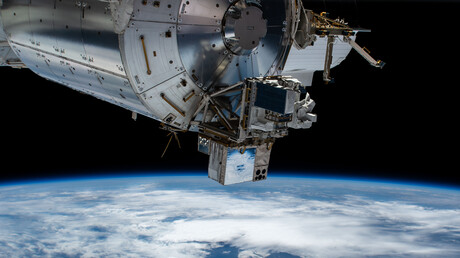
Western Sydney University and the United States Airforce Academy have completed a world-first demonstration involving transmitting neuromorphic data from space.
The trial involved the transmission of data from ground-breaking neuromorphic cameras on the International Space Station (ISS), developed by the university’s International Centre for Neuromorphic Systems (ICNS).
The two cameras are designed for earth observation and analysis of atmospheric events such as sprites, or electrical discharges from thunderstorms.
Neuromorphic engineering involves designing technologies based on characteristics observed in nature. Modelled after the human eye, the cameras are designed to capture ‘event-based’ data.
“These cameras don’t take pictures, but rather sense changes and only send those when they happen. This method of sensing the visual world allows them to perform tasks that simply cannot be done with a conventional camera,” commented Associate Professor Gregory Cohen, ICNS’s lead researcher on the project.
“Project Falcon Neuro is the first use of these sensors for earth observation from orbit, and the data received is the first neuromorphic data to be transmitted from space.”
The US Defense Space Test Program provided the integration and operations of Falcon Neuro on the mission to the ISS.
The cameras have already been used to capture data recorded as the ISS passed over the coastline of Honduras, which was streamed back to earth and processed using algorithms developed by the ICNS research team.
BlueVoyant launches ISOC in Defender deployment service
BlueVoyant's Integrated Security Operations Center in Microsoft Defender deployment service...
Australia leads APAC on AI ROI: Notion
Australian businesses are leading their APAC peers in tying AI directly to the bottom line, but...
Brennan launches managed innovation platform
Brennan's Innovation Foundry aims to provide organisations with a way to evaluate, deploy and...